
NDIS SIL Accommodation
Near You
Looking for supported independent living accommodation near you? MMT Care provides SIL accommodation across Sydney, Brisbane, Gold Coast, and Melbourne — real homes in real neighbourhoods, with a free registered nurse in every placement.
Understanding your options
What is NDIS accommodation?
"NDIS accommodation" isn't one single thing — it's a set of distinct funding categories, each covering something different. Getting them confused is the most common (and costly) mistake participants and families make.
The NDIS separates funding for support (the people who help you) from funding for housing (the building you live in). SIL and STA/STR fund support workers. SDA funds specialist-built housing. MTA bridges the gap while you wait for the right long-term option. Most participants only ever need one or two of these — not all four.
| Support type | What it funds | Best for | Typical duration | Budget category |
|---|---|---|---|---|
| SIL | Support workers in a shared home | Ongoing daily living support, 24/7 if needed | Ongoing / ongoing plan review | Core Supports |
| SDA | The specialist-built dwelling itself | Extreme functional impairment or very high support needs | Ongoing tenancy | Capital Supports |
| STA (STR) | Accommodation, food and 24/7 care together | Short respite breaks for participants and carers | Up to 14 nights per stay, 28 nights/year | Core Supports |
| MTA | Accommodation only (no food or care) | Bridging stays while a long-term home isn't ready | Up to 90 days | Core Supports |
General guide only — every NDIS plan is different. Confirm specifics with your planner, LAC, or support coordinator.
Understanding SIL
What is Supported
Independent Living?
Supported Independent Living (SIL) is an NDIS support category that funds the assistance people with disability need to live as independently as possible. It covers the cost of support workers — not the accommodation itself — and is typically delivered in a shared home setting.
SIL is one of the most significant NDIS supports a participant can access, and also one of the most complex to navigate. The NDIS funds the people who support you — not the house you live in. That distinction matters when you're planning your path.
MMT Care manages homes across four cities where support workers live alongside or work alongside participants, helping with everything from morning routines and medication to meal preparation, community access, and skill-building. The goal is always growth in independence — not permanent reliance on support.
"MMT Care took the time to understand what mattered to my daughter — not just what her plan funded. The home they matched her with feels like exactly the right fit."
What we provide you
Independence, dignity and choice
Our team empowers you to develop independence and maintain freedom of choice, while providing the best possible quality of life.
Daily Support
Receive daily assistance from a support worker with household tasks, personal care, and other activities of daily living.
Personal Space
Get your own private bedroom that respects your privacy and provides a comfortable personal space to call your own.
Accessible Design
Bedrooms and bathrooms are designed and built with accessibility in mind, ensuring comfort and ease of use.
Community Engagement
Support to attend appointments, social activities, and community programs — building connection beyond the home.
Tailored living solutions
Our accommodation options
Tailored living solutions to meet your unique needs and preferences — from long-term shared living to short transitional stays.
Supported Independent Living (SIL)
Live independently in a shared home with support for daily tasks and develop new skills — perfect for building independence while having support available when needed.
Explore SIL
Short Term Accommodation (STA)
Looking to try something new or cover for an unforeseen circumstance? Receive respite care in your home or a short stay away — ideal for temporary stays and respite.
Ask About STA
Medium Term Accommodation (MTA)
Found your forever home but it's not quite ready yet? Have a smooth transition in warm, accessible accommodation while you wait — perfect for transitional periods.
Ask About MTAEligibility & funding, explained
Who qualifies, and how it's paid for
Every participant's plan is different. Here's the general shape of how eligibility and funding work for each accommodation type — your support coordinator or planner will confirm the specifics for your situation.
Eligibility, generally
How funding works
This is general information, not financial or legal advice. NDIS rules change — always confirm current eligibility and funding rules with the NDIS, your Local Area Coordinator, or your support coordinator before making decisions.
Where we operate
Accommodation by location
MMT Care manages and staffs SIL and SDA-linked homes across four cities. Each region has its own local team, not a rotating agency roster.
Sydney
Brisbane
Gold Coast
Melbourne
An alternative approach
In-Home SIL
Support
Not every participant thrives in a group home. For some people, the structure and warmth of a real family home — smaller, quieter, with consistent support workers who become familiar presences — is a much better fit than a larger shared living arrangement.
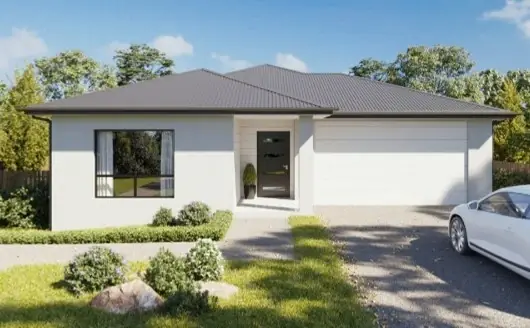
MMT Care's In-Home SIL Support model places participants in a structured family-home setting. The home is a genuine residential property in a real neighbourhood — chosen for its access to transport, community, and the things that matter to the specific participant moving in.
Learn About In-Home SILHow it works
The SIL placement process
There is no single path to a SIL placement — every participant's journey depends on their support needs, funding, goals, and the homes that are available at the time. Here is how MMT Care typically works with participants and support coordinators.
First conversation
We talk to the participant, their family, and their support coordinator to understand what a good home looks like — before we look at any vacancies.
Needs assessment
Our clinical team reviews the NDIS plan and support needs to identify the right rostering and home environment.
Matching
We weigh available homes, housemate compatibility, location and support teams. Matching takes time — deliberately.
Home visit
The participant and their family or coordinator visit before any decision — a genuine chance to see if it feels right.
Transition planning
We plan the move carefully with the participant's team, including overlap support during the settling-in period.
Ongoing review
Support plans are reviewed regularly and adapted as needs change — because goals at 25 aren't the same as at 35.
Current availability
SIL Vacancies Across All Locations
These homes are managed and staffed by MMT Care. All vacancies are subject to change — contact us to confirm current availability and suitability for a specific participant.
What families & coordinators say
Trusted by participants, carers
and support coordinators
"MMT Care found my son a home within a neighbourhood he already knew. The registered nurse on the team gave us enormous peace of mind — something no other provider offered without a premium charge."
"As a support coordinator I've referred several participants to MMT Care. Their compatibility process is thorough, the homes are genuinely well-maintained, and the clinical governance is a real differentiator."
"Living here feels like a real home, not a facility. I have the same support workers most days and we actually do things together in the community. MMT Care really listened to what I wanted."
Common questions
Questions about SIL & accommodation
Does SIL funding cover the rent?
No — SIL funding covers the support workers who assist you in the home. Rent and utilities are separate costs, typically covered by the participant's Disability Support Pension (DSP) or Rent Assistance. SDA (Specialist Disability Accommodation) funding is a separate NDIS category that covers some accommodation costs for eligible participants.
How long does it take to get into a SIL home?
Timelines vary significantly depending on the participant's support needs, the availability of compatible homes, and how straightforward the NDIS planning process is. MMT Care is honest about this — we won't create unrealistic expectations. Some placements come together in a matter of weeks; others take longer because finding the right match matters more than speed.
Can I choose who I live with?
Participant preference is central to the matching process. MMT Care considers personality, interests, communication styles, and daily routines when recommending housemates. We also encourage participants to meet potential housemates (where everyone consents) before any commitment is made.
Is MMT Care a registered NDIS provider?
Yes. MMT Care is a registered NDIS provider, which means participants with NDIS-managed or plan-managed funding can access our services. We operate under the NDIS Practice Standards and Quality Safeguarding Framework.
What's the difference between SDA and SIL?
SDA (Specialist Disability Accommodation) is NDIS funding for the physical dwelling — a home built or modified for extreme functional impairment or very high support needs. SIL is separate funding for the support workers who assist you day to day. Only around 6% of NDIS participants are eligible for SDA; most participants who need daily support access SIL without SDA.
How does Short Term Accommodation (STA) work?
STA — now often called Short Term Respite (STR) — funds accommodation, food and 24/7 support together, generally for up to 14 consecutive nights per stay and around 28 nights per year. It's designed to give informal carers, like family, a genuine break from their caring role.
How long can I stay in Medium Term Accommodation (MTA)?
MTA is generally funded for up to 90 days. Unlike STA, it only covers the cost of the room or house itself — not food or support. It's typically used as a bridge after hospital discharge, or while waiting for an SDA vacancy or home modifications to be completed. Extensions are only granted in exceptional, well-evidenced circumstances.
How much does SDA cost a participant?
The NDIS pays the SDA provider directly, but eligible participants generally contribute a Reasonable Rent Contribution — roughly 25% of the Disability Support Pension. The exact amount depends on your circumstances and should be confirmed with your provider and planner.
Also from MMT Care
Related services
Find SIL accommodation near you
Talk to our team about
SIL accommodation near me
Looking for SIL accommodation near you in Sydney, Brisbane, Gold Coast or Melbourne? Tell us about the situation — we'll give you an honest, helpful response. No pressure.
Or call us on 1300 066 822